Why Weird (Interview) Questions Work

· 7 min read

I recently had a conversation with some fellow documentarians about the technical writing job search process and how to succeed. Eventually we started talking about unique, interesting application and interview questions — and why they're such effective ways to gauge a person's ability to do the job. Someone told me they once had to explain how to play tic-tac-toe. Another person was asked, "What's a skill you have that has nothing to do with this job?"

And it got me going down my own rabbit hole...

Decoding the Technical Writing Job Market

· 21 min read

Layoffs. It's the word nobody wants to hear, but it's been a constant in the tech industry for the past few years. And with layoffs comes the job search, which means wading through hundreds of job ads, trying to figure out exactly what each company is actually looking for.

If you've recently searched for a technical writing job, you know the whiplash of scanning hundreds of postings with wildly different titles, requirements, and expectations. Documentation Specialist. Knowledge Strategist. Programmer Writer. Information Engineer. What does any of that mean, and which ones are actually in your wheelhouse?


Recognizing Your Influence at Work

· 5 min read

Many people, especially women and quieter professionals, underestimate how much influence they already have at work.

We tend to think influence belongs to executives, charismatic speakers, or the loudest person in the room. But influence is not reserved for leadership titles, dominant personalities, or people who always feel confident.

Influence is human. It’s something you have been doing your entire life. And once you recognize that, it becomes much easier to leave imposter syndrome behind.


Nailing the Interview

· 5 min read

Let's talk about the interview. Unfortunately, I'm not talking about about that job interview, and I am not an expert at landing new jobs.

I'm talking about the subject matter expert (SME) interview. You know the one: you have a small window of time with someone you barely know to learn intricate details about a product you barely understand...and then you have to decide how much of that information belongs in your documentation. Put like that, it sounds like a nearly impossible task, doesnt it?


2025: A Year in Review

· 3 min read

2025 has been a year of change, personally and professionally.

At the beginning of the year, I worked directly in the technical writing space, leading documentation initiatives. In April, I transferred to a role in PMO transformation. Through it all, I realized I was still solving the same problem: making information accessible and empowering people to learn and understand on their own.


Why Design Matters in Documentation

· 4 min read

From an early age, I noticed how our senses shape what we remember. Think about your earliest memories. If you write them down, chances are the strongest details aren’t what happened, but how it felt: what you saw, heard, smelled, tasted, or touched.

Here’s mine: I remember drinking from a bright red cup of slightly spoiled milk. I can’t recall when or where it happened (or even who was with me), but I vividly remember the sour taste and that bold red color. Those sensory details have stayed with me long after the moment itself faded.


Balancing Writing and Management Challenges

· One min read

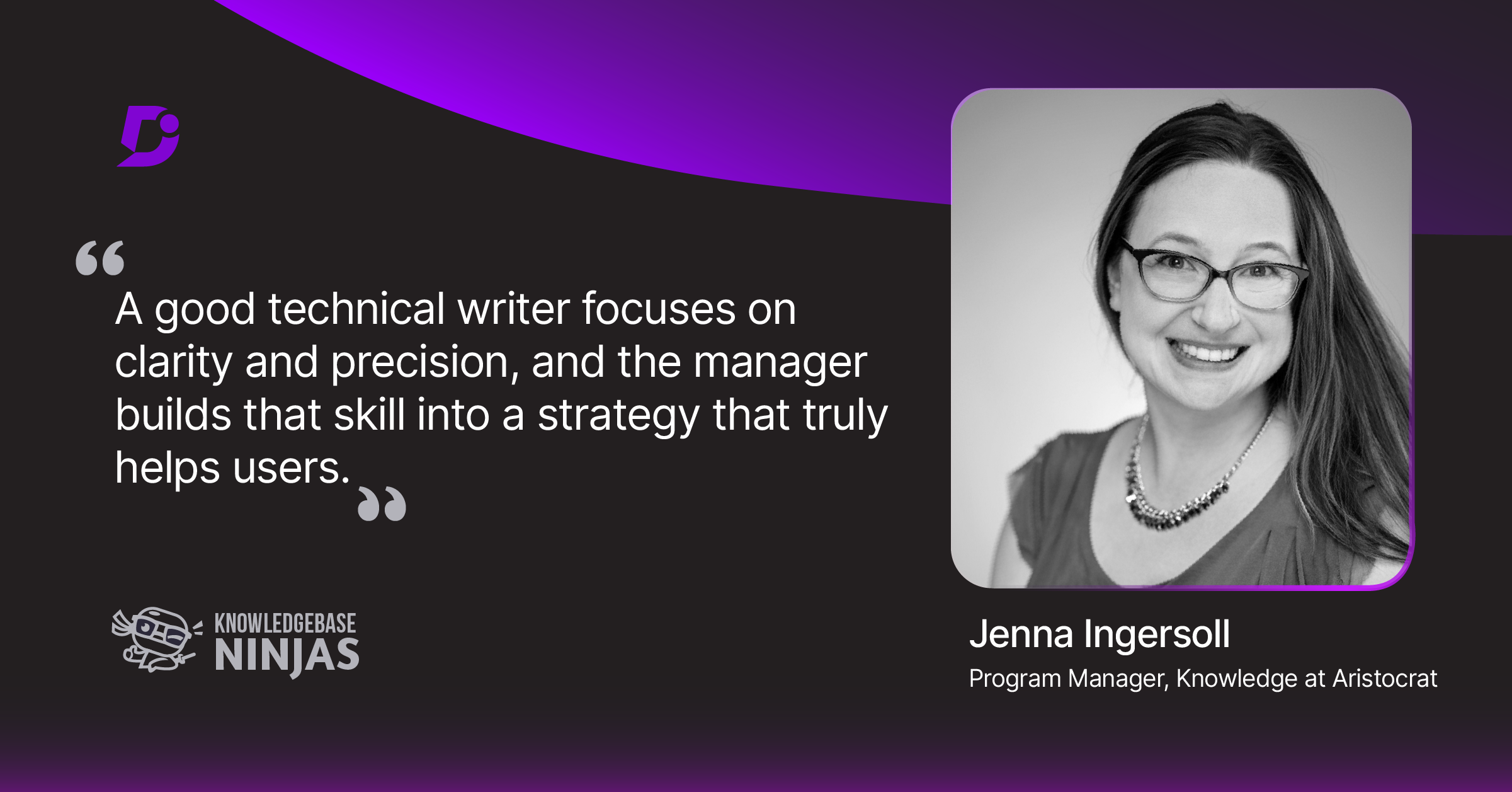
Recently, I had the chance to talk about effective knowledge solutions on the Knowledgebase Ninjas podcast from Document360. We dove into the real challenges technical writers face when moving into knowledge management, such as reorganizing scattered content systems, understanding information flow, and building effective documentation frameworks.